Printing Tips
We want you to succeed, so here are some suggestions for printing on our garments. These guides will help you achieve the best results with various printing techniques.
Discharge Rating
A color-by-color reference chart listing each garment color with its Pantone code and a discharge rating based on testing conducted on 4.5 oz combed ringspun cotton jersey products.
DISCHARGE RATING CHART
Double Dye
The double dye process uses two dyes, one for cotton threads and one for polyester threads. The process does not leave more dye in the fabric and is not overdying. Normal considerations should be given to temperature settings for flash and dryer settings and dwell times.
VIEW MORE
Styles 6901, 3321, 3518 & 6101: Blended Black 60/40 Cotton/Polyester - Double Dye
Style 6901ECO: Unisex CVC Recycled Blend Tee 60/40 Organic Cotton/Post-Consumer Recycled Polyester - Double Dye
Styles 4425 & 6904: Unisex Bamboo Tee 70/30 Viscose From Bamboo/Organic Cotton - Double Dye
Styles 3502 & 6902: Washed Jet Black 55/45 Ringspun Cotton/Polyester - Double Dye
Ink Choices
Use Cotton/Poly bleed-resistant inks such as Rutland Street Fighter Low Bleed. If dye migration is a problem on your substrate, use an underbase layer that's made to prevent dye migration.
Lay down a thin layer of ink. A thin layer of ink means you can cure your ink at a lower temperature to help avoid dye migration. Use the highest mesh count possible for your print, make sure your screen tension is where it should be, and set an off-contact distance of about 1/16 inch to reduce the thickness of your ink deposit. Use a Print/Flash Print method to build cured layers.
Best Practices
Polyester-blend substrates have plenty of benefits, but there are some challenges to printing on them. Mainly, these substrates are at risk for dye migration because of their polyester component. When polyester reaches temperatures above 360 degrees, the dye inside the fabric can turn into a gas and become embedded in your ink, tinting your ink the color of the garment.
You can combat dye migration with a few tricks:
- Monitor your dryer temperatures. Know the temperature of your conveyor dryer, and test it regularly. Use a donut temperature probe as you cure your ink.
- Test your substrate. If you're printing on a new polyester blend substrate, test your ink and your normal printing process to see if it avoids dye migration. If the dye does migrate, you might need to consider using a different type of ink on that fabric.
- Monitor your flash cure. You don't have to worry about dye migration only during the final cure; it also can happen if you let your substrate get too hot under your flash unit. Temperature tape on your substrate can help you monitor the temperature of your polyester blend both under the flash cure unit and as your final print travels through the dryer.
DTG Printing
When the right garment meets the right process, DTG printing delivers full-color, photo-quality results with no minimums and no screens. The key is fabric — cotton's natural fiber structure, dye chemistry, and compatibility with water-based inks make it the clear choice for consistent, durable prints with minimal production variables.
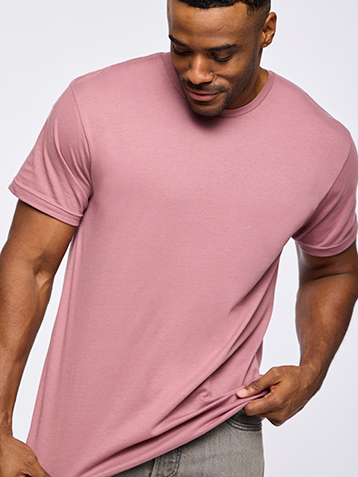
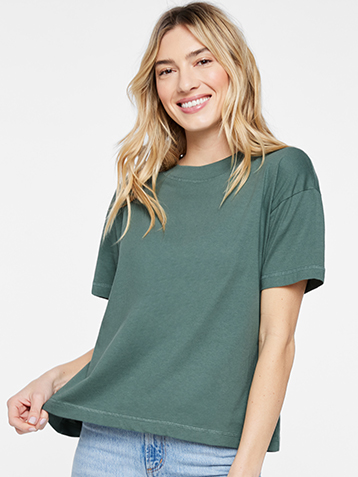
L.A.T. Apparel's 100% combed ringspun cotton styles deliver the most consistent DTG results across pretreatment, curing, and wash durability. Recommended in solid and heather colorways only — CVC and Blended Black variants are 60/40 and are not recommended for standard DTG workflows.
WHY COTTON FOR DTG
1. Stable Color Performance
Cotton garments are typically dyed with fiber-reactive dyes that remain stable during the DTG curing process. This stability prevents unwanted color shifting and ensures printed designs stay clean, accurate, and consistent over time. Note: pigment-dyed cotton can produce inconsistent pretreatment absorption and is not recommended for standard DTG workflows.
2. Superior Ink Absorption
DTG inks are water-based and engineered to bond with natural fibers. Cotton absorbs ink effectively into its fiber structure, resulting in strong adhesion, excellent wash durability, and a soft, smooth print that resists cracking and fading.
3. Reliable Pretreatment Results
Pretreatment performs most consistently on cotton fabrics. It evenly prepares the print surface, supports strong white ink opacity, and minimizes issues like staining, scorching, or visible outlines — leading to more predictable print quality and fewer production variables.
4. Wider Heat Processing Window
Cotton tolerates DTG curing temperatures well, providing a broader margin for error during heat application. This flexibility supports proper ink curing without risking fabric damage or color distortion across varying production conditions.
5. Alignment With Standard DTG Equipment
Most commercial DTG systems are engineered and manufacturer-approved for cotton garments in their standard configuration. Printing on cotton aligns with established workflows, recommended consumables, and validated curing profiles — improving overall production success rates and outcome predictability.
6. Best Use Recommendations
For optimal DTG results, choose 100% cotton garments whenever possible. Blends with a high cotton content — typically 80% or more — can also perform well, though results may vary depending on fabric composition and finishing.
Important Consideration
DTG can be used on cotton/poly blends or other fabric constructions, but these materials may require adjusted pretreatment, modified curing settings, or specialized inks. They can also produce less vibrant prints or reduced wash durability compared to 100% cotton. For polyester-dominant or synthetic substrates, more reliable decoration options include screen printing with low-bleed plastisol inks, dye sublimation (for 100% polyester), or Direct-to-Film (DTF) printing.
Printed Fabric Printing Tips
Screen printers could have issues with ink migrating from printed fabrics to the screen print image they place on the garment.
Dye migration can occur, as the heat during drying causes the printed dyes to revert back to a "liquid" state.
Be sure to contact your transfer supplier before using transfers on printed fabrics.
Try out these tips and more below to improve results the next time you print on our printed tees and fleece.
PRINTED FABRIC GUIDE
Snap Tapes
Snap tapes result in a soft, smooth closure and you can keep them that way by following these guidelines.
SNAP TAPE GUIDE
Sublimation Printing
Printing tips for decorating on our 100% polyester sublimation tees and bodysuits.